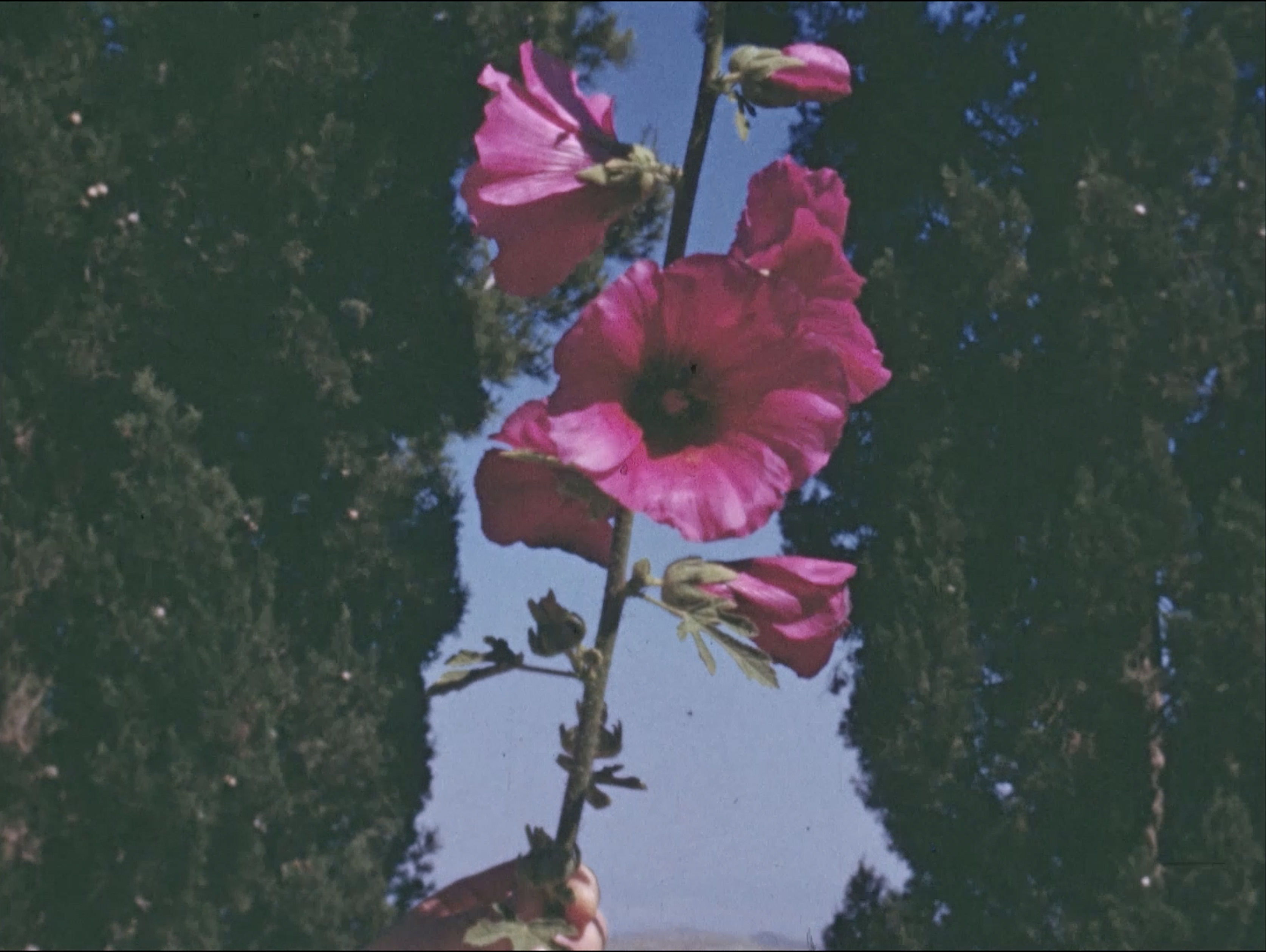
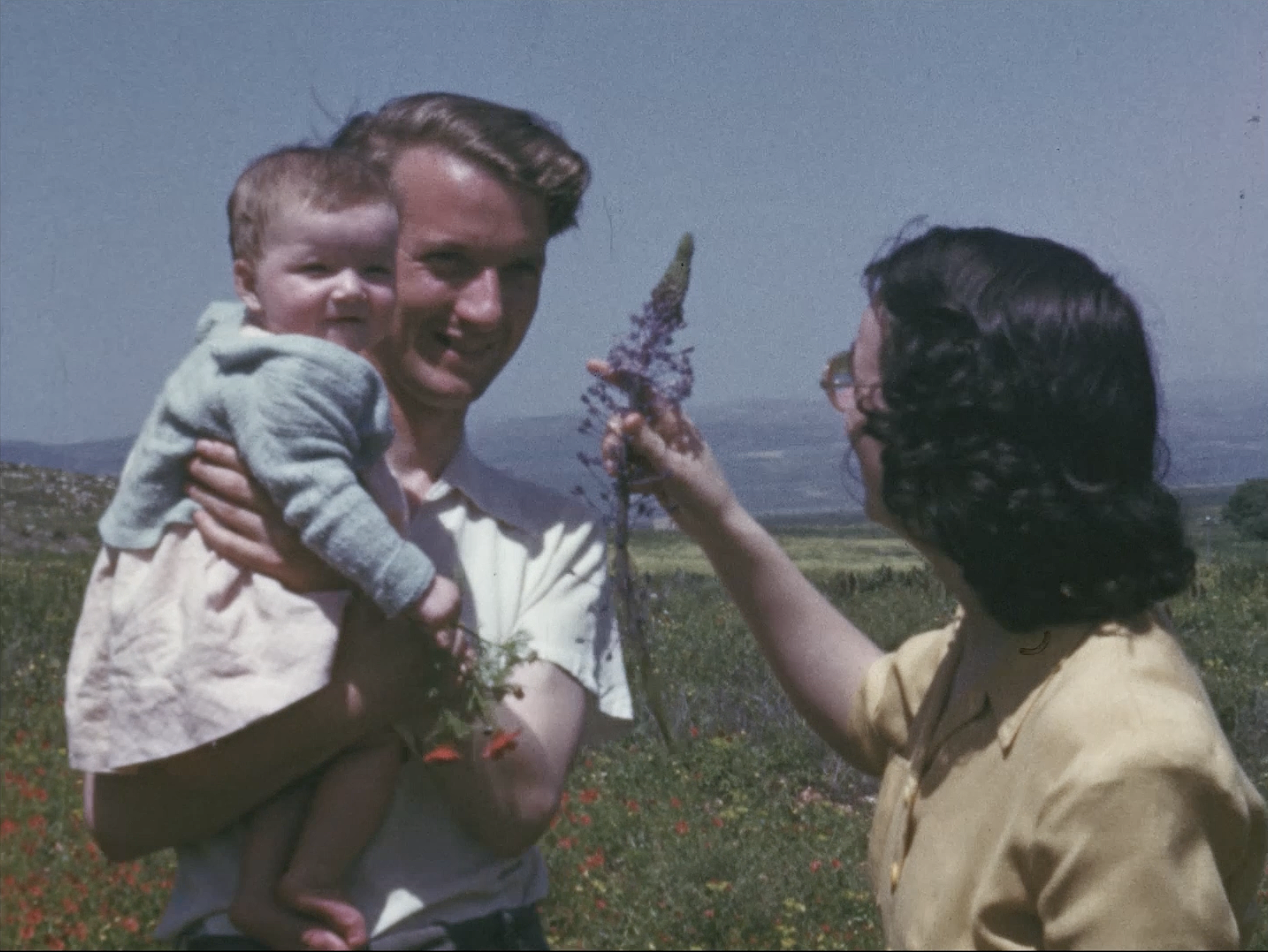
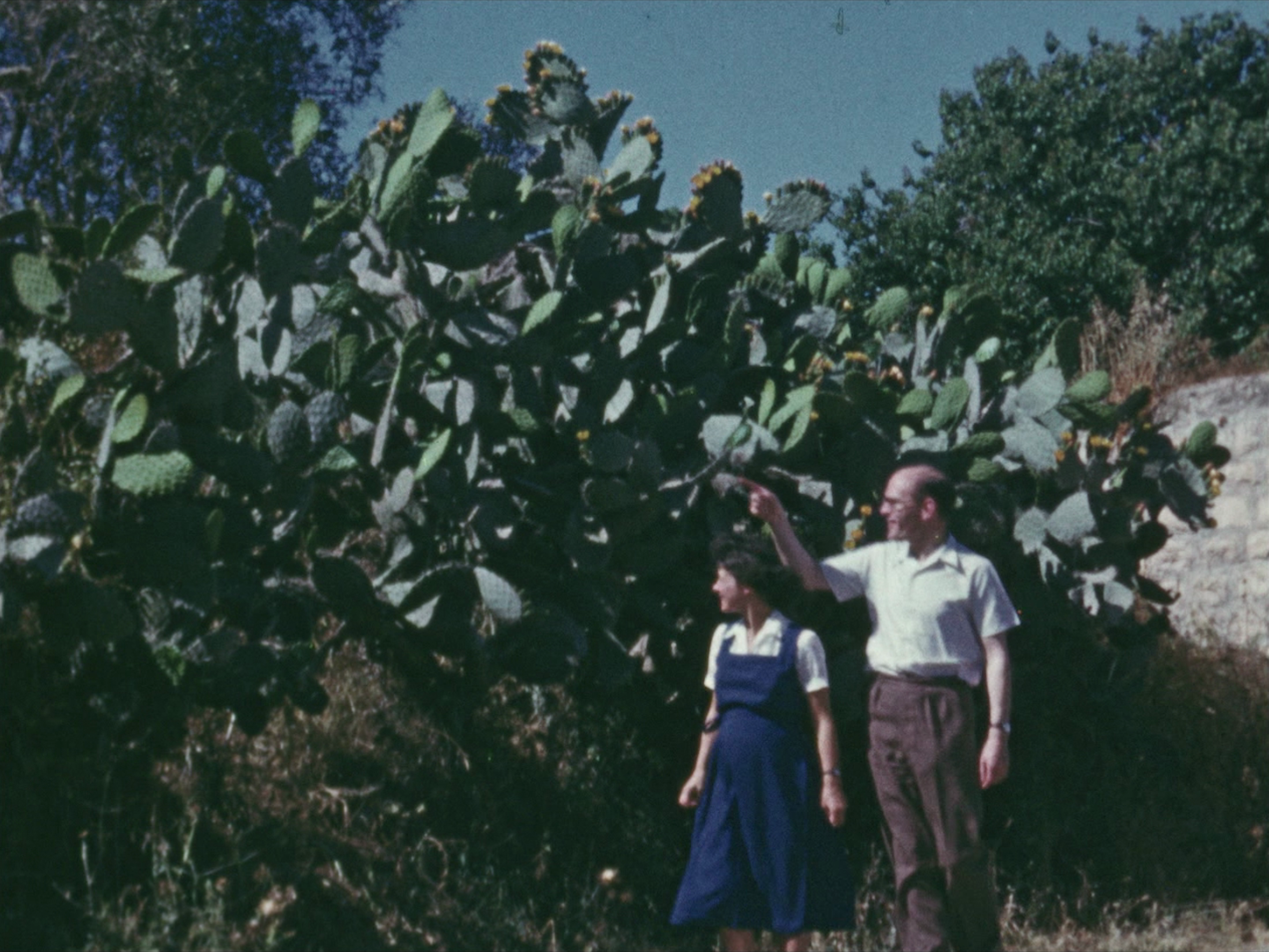
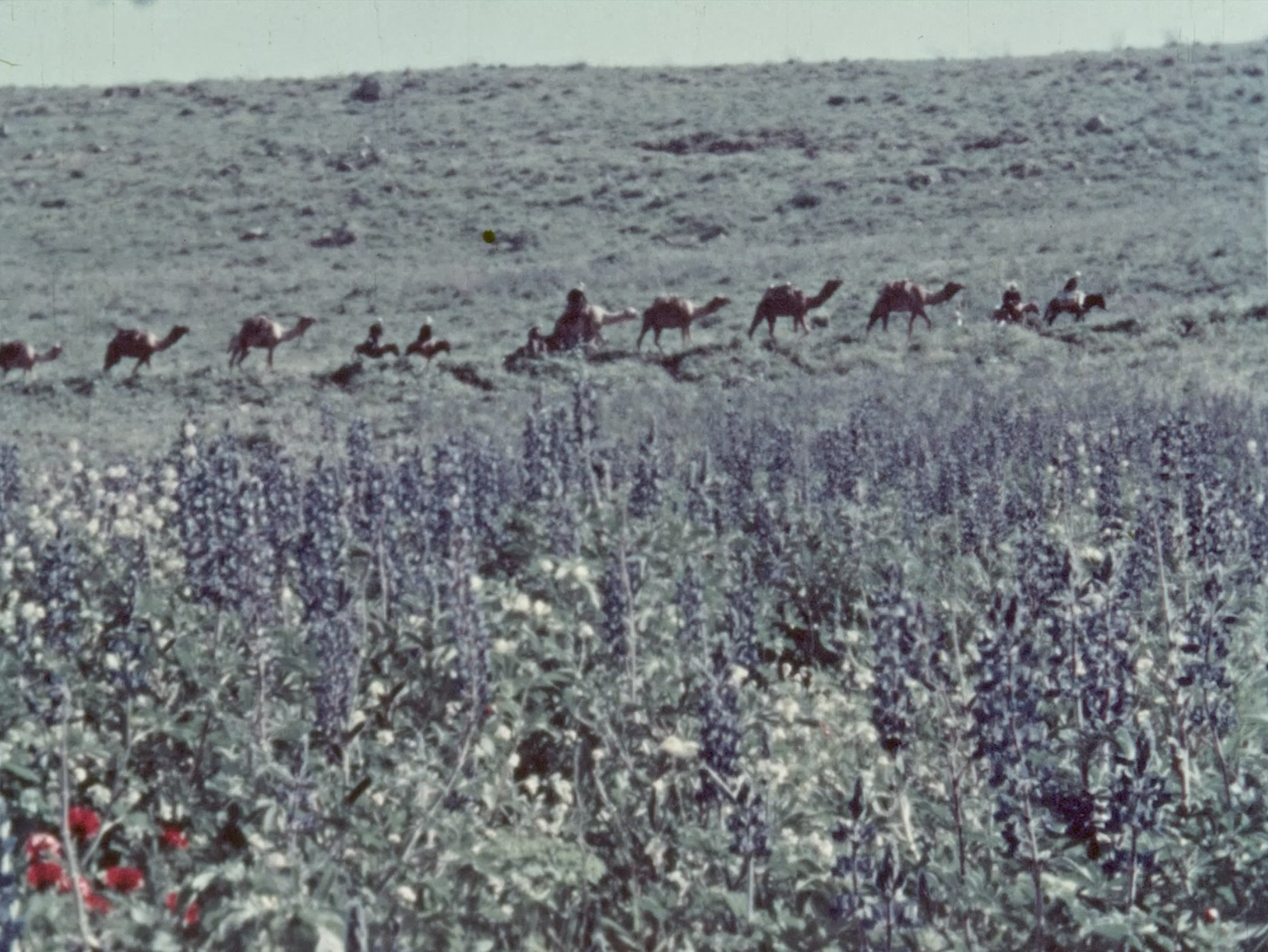
When a filmmaker of Palestinian descent based in Scotland unearths a rarely-seen Scottish film archive of Palestinian wildflowers, he decides to reclaim the footage. This tender film essay questions the role of image-making as a tool of both testimony and violence when connected to entanglements between people and the land.
Drawing on a device similar to Kamal Aljafari’s Camera of the Dispossessed (a concept where archival images of Palestine, made from the colonizer’s perspective, are reappropriated by Palestinian filmmakers), THE FLOWERS STAND SILENTLY WITNESSING reappropriates some of the first color images of Palestine from the time of the British occupation to construct a striking essay about how the image is an essential component of colonialism. Filmmaker Theo Panagopoulos examines these shots of native flora taken by a Scottish Catholic missionary a decade or so before the Nakba and uncovers, beneath their apparent bucolicism (shots of endless fields of flowers or close-ups documenting various indigenous floral species) a violence inherent to the process of land dispossession. A violent process that is “ratified,” “realized” by – and through the image. However much these archival images try to position the Palestinians out of the frame, their image persists – thus reflecting their resistance. Panagopoulos works precisely to highlight what the original material was trying to hide. (Flavia Dima)

Theo Panagopoulos is a Greek-Lebanese-Palestinian filmmaker based in Scotland. His work explores themes of collective memory, displacement, fragmented identities and archives. He has directed multiple short films that screened in reputable festivals such as Sundance, Doc Lisboa, Thessaloniki among others and his most recent film called The Flowers Stand Silently, Witnessing won the best short film award at IDFA 2024. He is currently completing his PhD research on colonial film archives connected to 1930s Palestine.