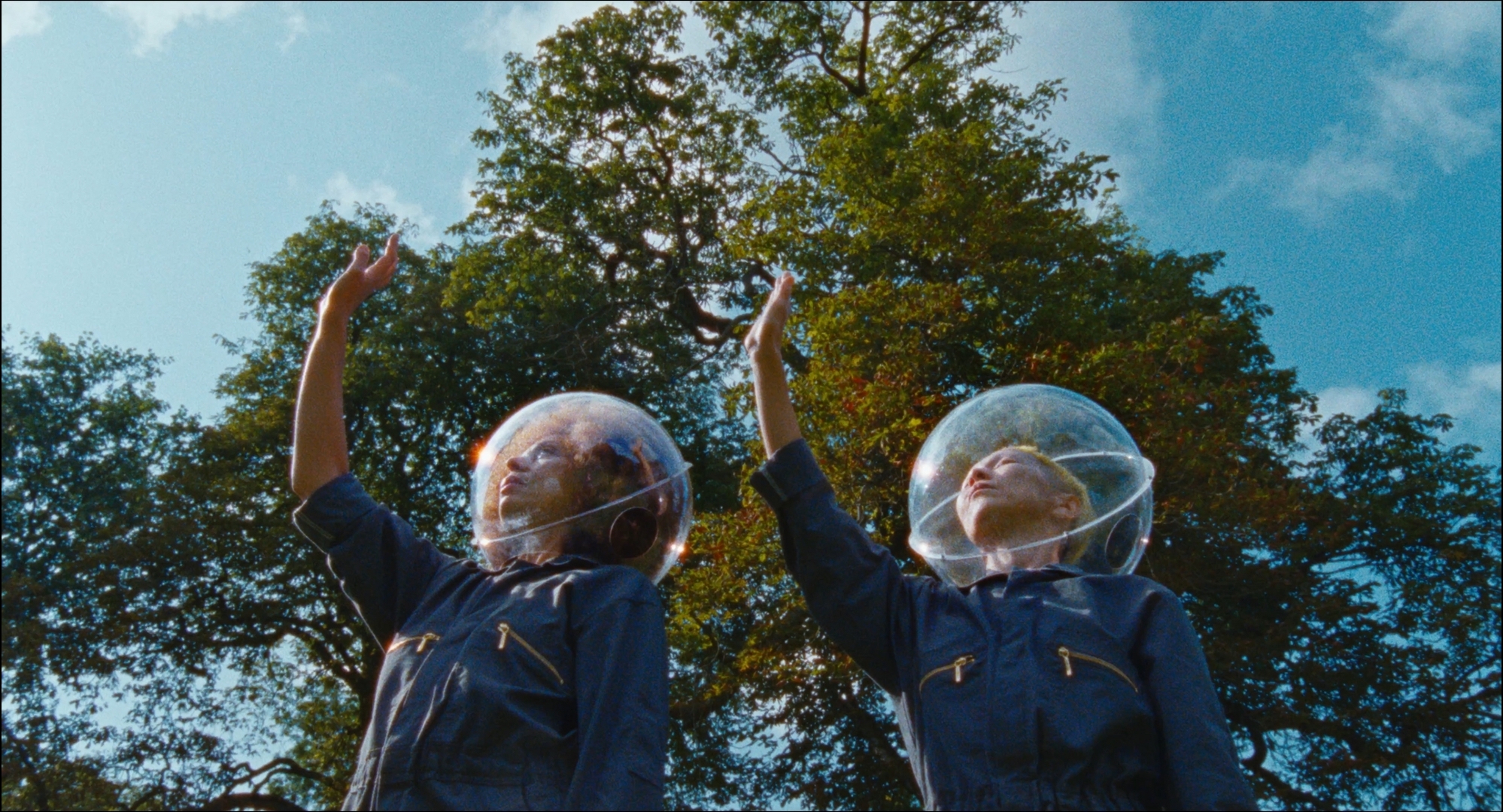
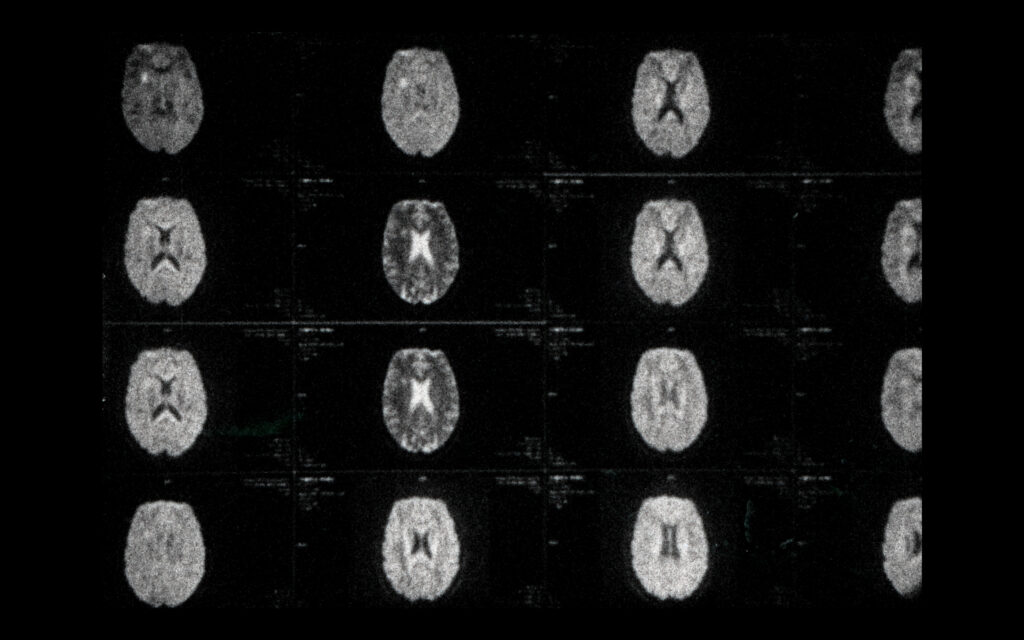
In the aftermath of a mysterious disaster, the few humans left find themselves unable to reproduce the species. All hope lies in the hands of five women who have developed the technology to create human life outside the body.
What makes EROGENESIS such a revisionist science fiction? For example, the fact that nothing “happens” – in the photogenic post-apocalyptic world imagined by Xandra Popescu, in which a group of queer researchers are working on an artificial womb that could repopulate the planet, the ethical problems of such an invention prevent any actual action from taking place. And Tom, the mysterious and erotic stranger straight out of Pasolini’s Teorema, raises even more questions, stirring the narrative into new detours of leisure. The post-apocalypse has never seemed more pleasurable. Xandra Popescu manages an impressive equilibrium between taking herself very seriously and having a lot of fun, a grace well captured by the very concept of erogenesis (eros + genesis), landing somewhere between B movies with mad scientists and a PhD in cultural studies. (Călin Boto)

Xandra Popescu grew up on a steady stream of pirated films — which is how she became a cinephile. She studied Politics and Playwriting but then went on to work as a curator. All the while, she published short stories, wrote art criticism, and lent her pen to film and theatre directors. She’s now making films.